
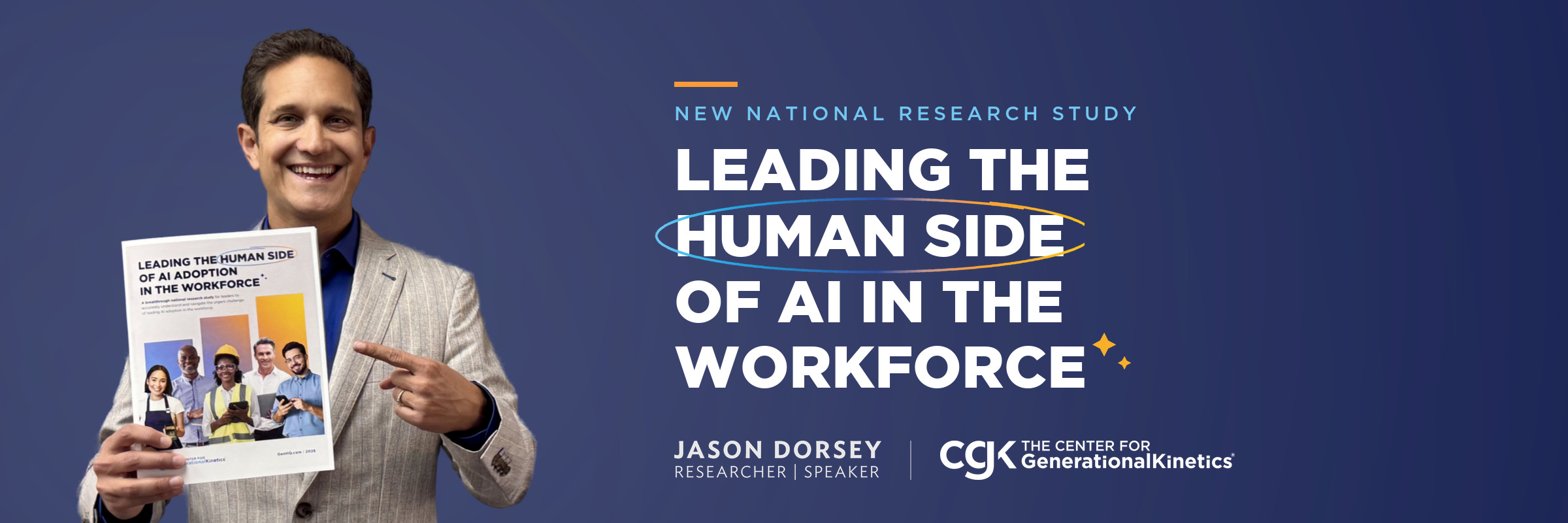
It’s here! Our new national research study, Leading the Human Side of AI Adoption in the Workforce, couldn’t have arrived at a more important time.
Many AI strategy and adoption plans start with the technology. This creates a huge hole within the strategy, because workforce adoption of AI fundamentally and always starts with people. Finally, a study about AI adoption in the workforce with a focus on humans.
We, too, were excited to fill this knowledge gap through original research. There is plenty of opinion about how workers think about AI, but far less behavioral data about how employees and leaders actually experience it.
Why is now the right time for this study?
Because leaders at all levels are under tremendous pressure to deliver results with AI while they also inspire their people, maintain a great culture, and unlock the potential of their teams and organizations. It’s a hard, complicated time to make this happen.
That’s why we must separate myth from truth through research about what leaders need to know and do to uncover what actions work best to build trust, adoption, and momentum with AI.
We designed a custom study and surveyed a national sample of 1,000 employed Americans who have used AI as part of their job in the past year, weighted to the 2020 U.S. Census. Our CEO, Denise Villa, PhD, led the study with President Jason Dorsey and Lead Researcher Jared Boucher. The findings were eye-opening and counter to many headlines and narratives about AI adoption.
“AI can change what work is capable of, but people determine whether that change actually happens,” says Denise Villa, PhD. “Our research shows leaders have to solve the human side of AI if they want to unlock the business side.”
What does the workforce want leaders to understand about AI?
Here are a few examples from the many discoveries in the full report.
Surprise: The Leaders Most Excited About AI Are Losing the Most Sleep
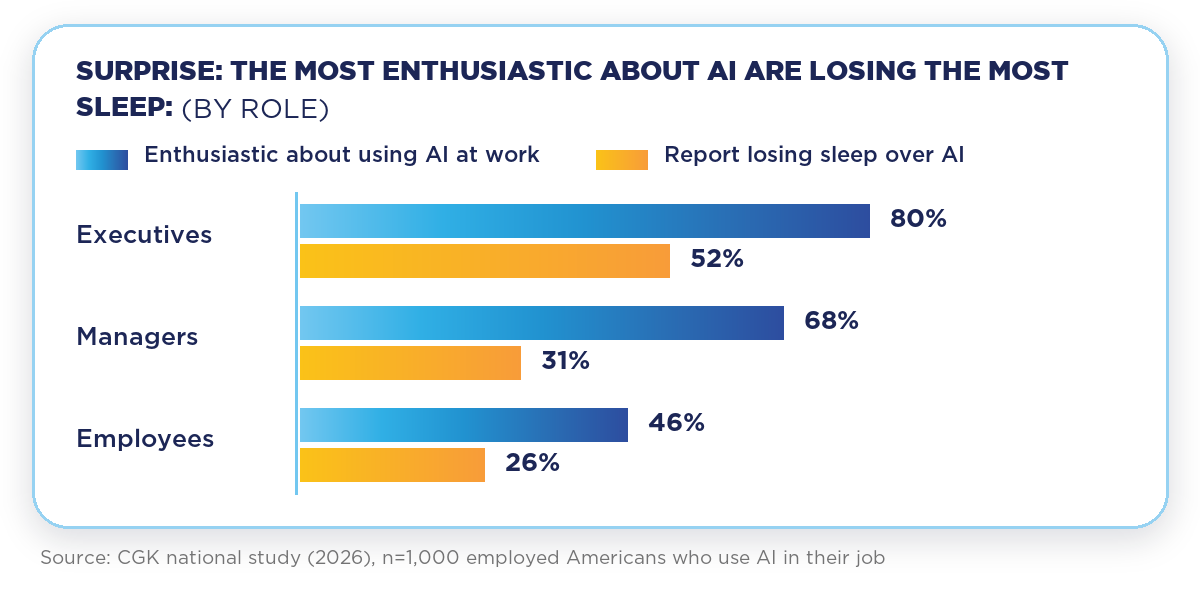
Executives are the most enthusiastic about the promise of AI. In the study, 80% of executives are enthusiastic about using AI at work, compared with 68% of managers and 46% of employees.
But here’s the surprise. Executives are also the number one group losing sleep because of AI (52% of executives, compared with 31% of managers and 26% of employees). They’re feeling the pressure and intensity of driving AI adoption within their organizations, in addition to knowing the benefits AI can deliver. That speaks to both the excitement executives articulate and the challenges they acutely feel, as their careers may also be on the line.
The Skill Workers Say Will Matter Most Within a Year
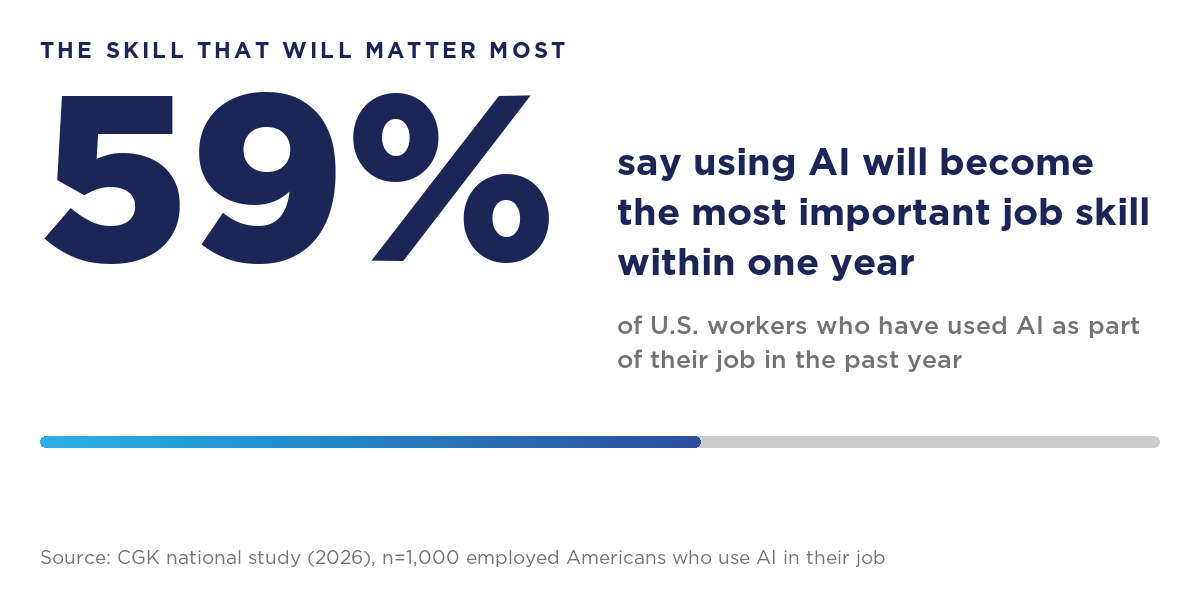
A must-know for training and talent development: 59% of the U.S. workforce who have used AI at work say using AI will become the most important job skill within one year. Workers expect AI to shape or ultimately redefine their careers, and many want that future to feel clear and transparently led. That puts a lot of pressure on employers to offer resources, training, coaching, and tools to help employees bridge the AI skills gap.
What drives trust when it comes to adopting AI in the workforce?
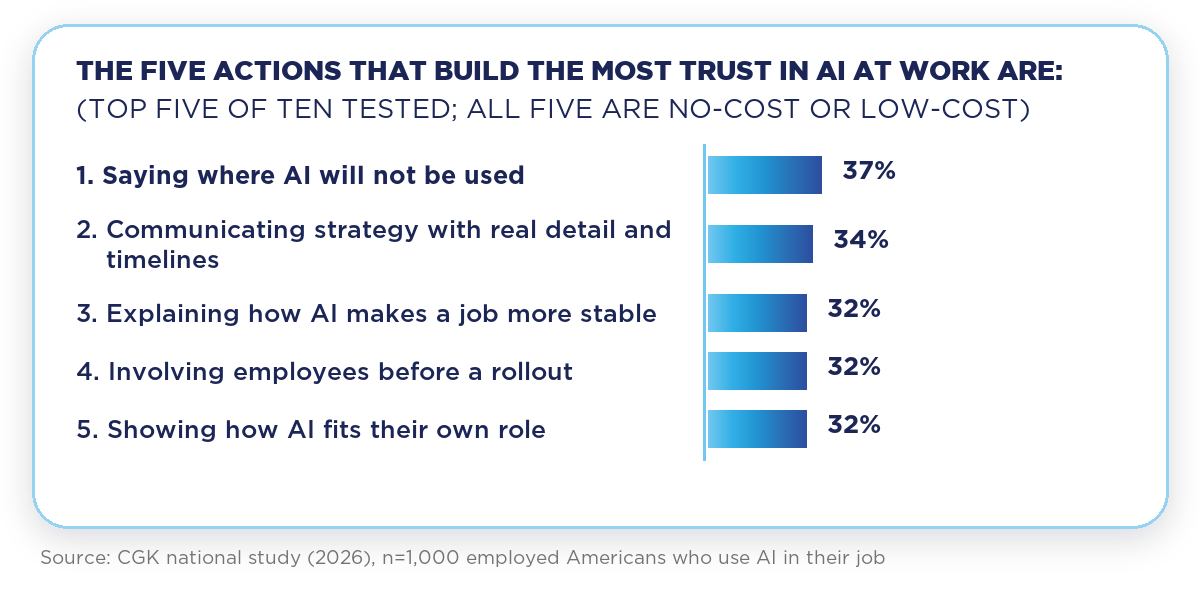
Trust is essential for AI experimentation, usage, and adoption. More than one in three members of the U.S. workforce (35%) who have used AI at work do not trust their organization’s leaders when it comes to AI plans. That shows how big a trust bridge leaders must build today to fully unlock the promise of AI with the talent in their workforce.
The great news for leaders who are responsible for driving AI adoption within their workforce today: of the 10 trust-building actions the study tested, the top five cost little or no money to implement. In fact, the number one trust-building action that employees would value from leaders is simply saying where AI will not be used in the workforce. Trust is the part of AI adoption that no software can install, yet it’s often the part most overlooked by leaders and the easiest to strengthen.
“The study also reveals that the AI results gap is less a technology gap and more a gap in change management and technology adoption that can be bridged through specific actions, planning, training, and approaches that leaders need to know and use today,” says our President, Jason Dorsey.
Download the full 38-page report on Leading the Human Side of AI Adoption in the Workforce
The report is filled with insights, charts, discoveries, and perspective, including:
- Which leadership characteristics most influence the workforce’s view of AI
- Where unexpected resistance to AI is affecting results
- The fastest way leaders can build trust to drive better workforce outcomes fast
Download the full report to gain all the insights and put them to use immediately to unlock the talent of your people and organization as AI rapidly emerges as an essential growth lever. You’ll also find discussion questions to accompany each key insight so your leadership team can quickly advance conversations, make better decisions, and take more effective action faster.
Download the free 38-page report here. On the same page, watch Jason share a few of his favorite insights from the study in a short video.
We’re here to help you accelerate AI adoption and enthusiasm
Many leaders want to dig deeper into how the findings apply to their own teams, industries, and cultures. That’s why The Center for Generational Kinetics (CGK) partners with organizations to go beyond the data. We apply these insights to your workforce through custom research studies, executive and leadership advisory sessions, and tailored presentations that spark action and alignment.
Our President, Jason Dorsey, brings these discoveries to life in his new keynote, Leading the Human Side of AI Adoption at Work. He shares personal stories, unexpected data, and specific, frontline-tested strategies leaders can use to strengthen trust, increase adoption, and help employees use AI in ways that amplify their talent. When he recently shared these insights with 1,500+ leaders at McKesson IdeaShare, the incredible response reinforced just how urgent this conversation has become.
Your audience will leave with:
- A new understanding of what really drives AI adoption
- Clear ways to rapidly build more trust and confidence around AI
- Specific actions that spark AI adoption aligned with your organization, industry, and culture
As AI transforms industries, opportunities, and challenges, now is the time to make the people side of AI adoption an advantage with every generation you lead. To bring this research to your event, visit Jason’s speaking page.